

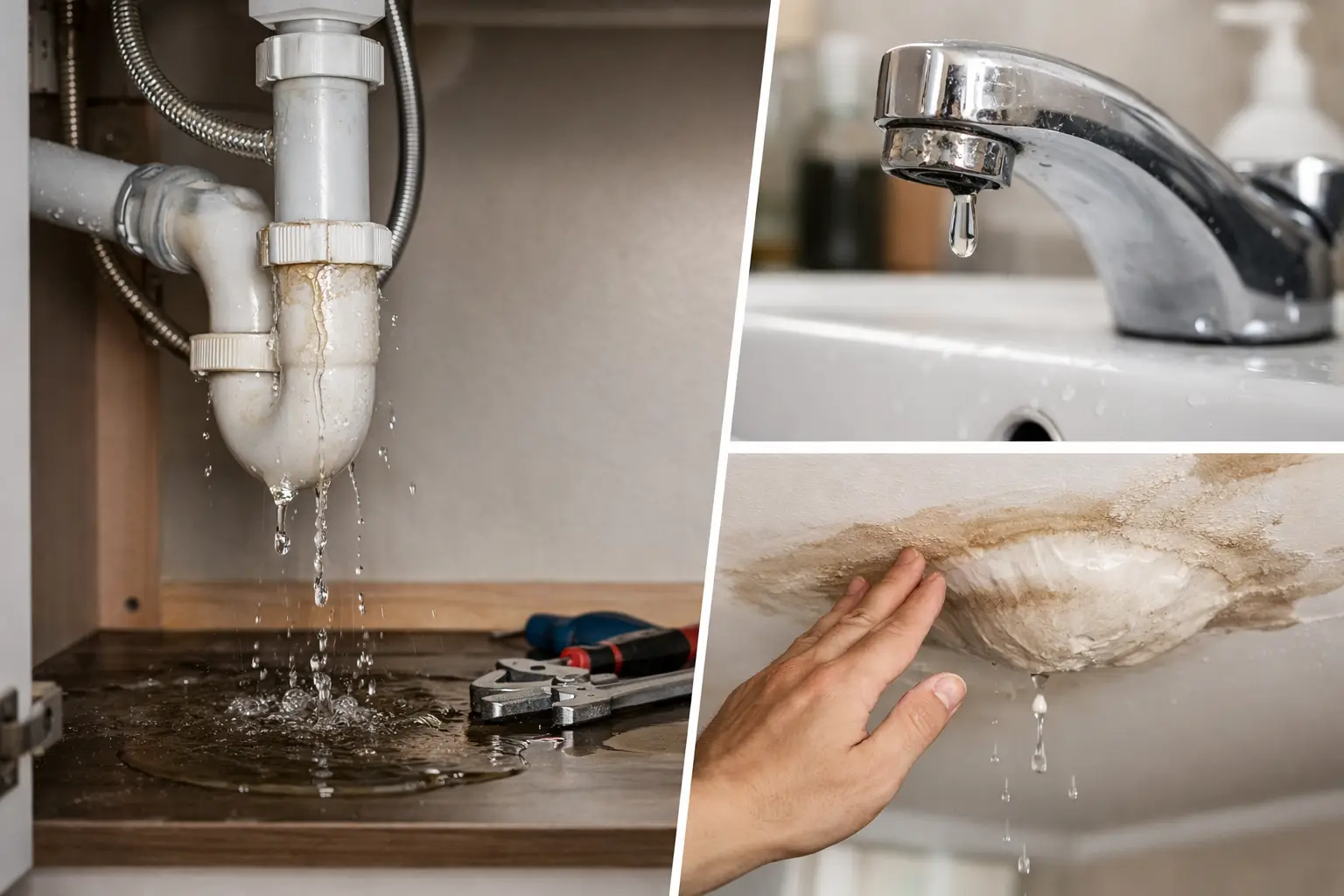
A small stain beneath a bathroom vanity or a drain that takes longer to clear can look like a minor household nuisance. In many homes, those are the top signs of plumbing failure beginning behind finished walls, under slabs, or inside aging supply lines. Addressing the cause early is usually far less disruptive than repairing water-damaged framing, flooring, cabinetry, or drywall later.
For Ventura County homeowners planning a bathroom remodel, kitchen renovation, addition, or ADU, plumbing condition deserves attention before new finishes go in. Tile, custom cabinets, and fresh paint should not be installed over an unresolved leak, compromised drain line, or outdated piping system.
1. Water stains, peeling paint, or soft surfaces
A yellow-brown ceiling ring, bubbling paint, warped baseboard, or soft drywall is not simply a cosmetic concern. It indicates that moisture has reached materials that are meant to stay dry. The source may be directly above the visible damage, but water also travels along pipes, framing, and drywall before it appears.
Check the area after showers, dishwasher cycles, laundry use, or heavy rain. A stain that grows, feels damp, or returns after repainting requires investigation. In a two-story home, a stain below an upstairs bathroom can point to a shower pan issue, toilet seal, drain connection, or supply-line leak. The exact cause matters because each repair has a different scope.
2. A sudden or unexplained increase in your water bill
Water use rises for ordinary reasons, especially when irrigation schedules change or guests are visiting. But a steady increase without a clear explanation can signal a hidden leak. Toilet flappers that do not seal, leaking irrigation components, and underground or in-wall supply-line leaks are common possibilities.
A practical first check is to turn off faucets, appliances, and irrigation, then look at the water meter. If the meter continues to move, water may be flowing somewhere it should not. This test does not identify the location, and some homes have equipment that cycles automatically, but it is a useful reason to call a qualified plumber for further diagnosis.
3. Slow drains that keep returning
One slow sink may be caused by soap residue, hair, or debris near the fixture. When multiple drains run slowly, however, the problem may be farther down the branch line or main sewer line. Repeated clogs after plunging or cleaning are another warning that the underlying restriction has not been resolved.
Older homes can have aging drain materials, root intrusion, offsets at pipe joints, or deteriorated sections of sewer line. Grease buildup is also a frequent kitchen issue. Avoid treating recurring drain problems with repeated chemical drain cleaners. Those products can be hard on some pipe materials, rarely solve a structural issue, and can create safety concerns for the person opening the line later.
A camera inspection can help determine whether the problem is buildup, roots, a damaged pipe, or a slope issue. That information turns a guess into a defined repair decision.
4. Gurgling sounds and sewer odors
Drains should move water quietly and consistently. Gurgling in a sink, tub, or toilet can mean air is being pulled or forced through the plumbing system because a drain or vent is restricted. If a toilet bubbles when a nearby fixture drains, the system needs attention.
Sewer odors are equally worth taking seriously. A dry trap in an infrequently used guest bathroom may be the simple explanation. Running water in the fixture can restore the trap seal. Persistent odor, especially near drains, crawlspaces, or exterior sewer cleanouts, may indicate a venting issue, damaged drain connection, or sewer-line concern.
Do not cover the odor with air freshener and assume the issue is solved. Plumbing systems are designed to carry wastewater away while keeping sewer gas out of the home. When that separation fails, the cause should be identified.
5. Low water pressure or uneven pressure
Low pressure at one showerhead can be as simple as mineral buildup in the fixture. Low pressure throughout the house is different. It may relate to a pressure regulator, partially closed valve, water-service issue, corroded galvanized pipes, or a leak that is reducing available flow.
Pay attention to changes rather than just the pressure level. If a shower loses flow when another fixture is used, or if pressure has gradually declined over months, record where and when it happens. That detail helps a plumber separate a fixture issue from a whole-house supply problem.
High pressure can be damaging too. Excessively high water pressure puts added stress on valves, appliance hoses, water heaters, and supply connections. A pressure check and properly functioning regulator are inexpensive safeguards compared with repairing a sudden failure.
6. Discolored water, corrosion, or metallic taste
Rust-colored water that appears briefly after a period of nonuse can sometimes come from an aging water heater. Water that remains discolored, or appears at multiple fixtures, deserves a closer look. Corrosion inside older galvanized piping can reduce flow and affect water appearance over time.
Blue-green staining around copper fittings or beneath faucets can indicate corrosion or a slow leak. White mineral deposits often point to small, ongoing seepage at a connection. Neither should be ignored simply because the area is dry when you inspect it. Slow leaks often evaporate between uses while continuing to damage nearby materials.
Water quality questions can involve plumbing, the water heater, or the incoming supply. A professional assessment should identify the source before selecting a repair or replacement approach.
7. A running toilet or a toilet that moves
A toilet that runs intermittently can waste a surprising amount of water. In many cases, the repair is limited to an internal fill valve or flapper. It is still worth fixing promptly, both to control the water bill and to prevent a minor component failure from becoming an overflow risk.
A toilet that rocks, shifts, or feels loose is more urgent. Movement can break the wax seal at its base, allowing water to escape below the finished floor. On upper levels, that moisture can damage the ceiling below before there is any visible evidence in the bathroom. Do not keep tightening bolts or caulking around the base as a permanent solution. The toilet needs to be removed and the flange, seal, and surrounding floor condition checked.
8. Moisture or mold inside cabinets and around appliances
Open the cabinet below kitchen and bathroom sinks periodically. Look for damp shelves, swollen particleboard, rusted shutoff valves, staining around supply connections, or a musty smell. Also inspect behind the refrigerator water line, dishwasher, washing machine, and water heater when accessible.
Mold is a moisture clue, not a diagnosis by itself. It can result from plumbing leakage, poor ventilation, exterior intrusion, or a combination of conditions. The correct response is to find and correct the water source first, then repair affected materials as needed. Covering the evidence without solving the cause invites a repeat problem.
When plumbing warning signs become a remodeling decision
Not every plumbing repair calls for a full renovation. A single leaking valve or worn fixture can often be addressed directly. The decision changes when walls or floors must be opened, pipes are near the end of their service life, fixtures are outdated, or a planned remodel will soon cover the same areas.
For example, recurring shower leaks in an original bathroom may justify evaluating the shower assembly, waterproofing, drain, ventilation, and supply piping together. Likewise, a kitchen remodel is a sensible time to inspect shutoff valves, dishwasher connections, drain routing, and water lines before cabinets and countertops are installed.
This is where clear scope matters. Homeowners should know what is being repaired, what is being replaced, what conditions are visible versus concealed, and how inspections will be handled when permits are required. No vague statements and no assumptions that a fresh finish alone resolves a building-system problem.
What to do when you notice a possible failure
Start by limiting damage. Shut off the local fixture valve if the leak is isolated. If water is actively flowing and cannot be controlled, shut off the home’s main water supply and contact a licensed plumbing professional. Move belongings away from wet areas, photograph visible damage for your records, and avoid using the affected fixture until it is evaluated.
For recurring or less urgent symptoms, keep a short record of what you see: the fixture involved, time of day, recent water use, odors, sounds, and whether the issue affects more than one room. Good information leads to faster diagnosis and a more accurate repair plan.
When plumbing work connects to a larger renovation, Eagle Pride Construction coordinates the design, permitting, construction, and inspection steps so the finished space is built on sound systems, not hidden problems. A careful response now protects more than a room. It protects the work, comfort, and value you expect from your home.